
Linking Online Signals to Physical Event Risk
 Christopher Fitzgerald
Digital threats rarely stay digital. Teams need one view that connects hostile online activity with protests, crime, weather, and infrastructure events nearby.
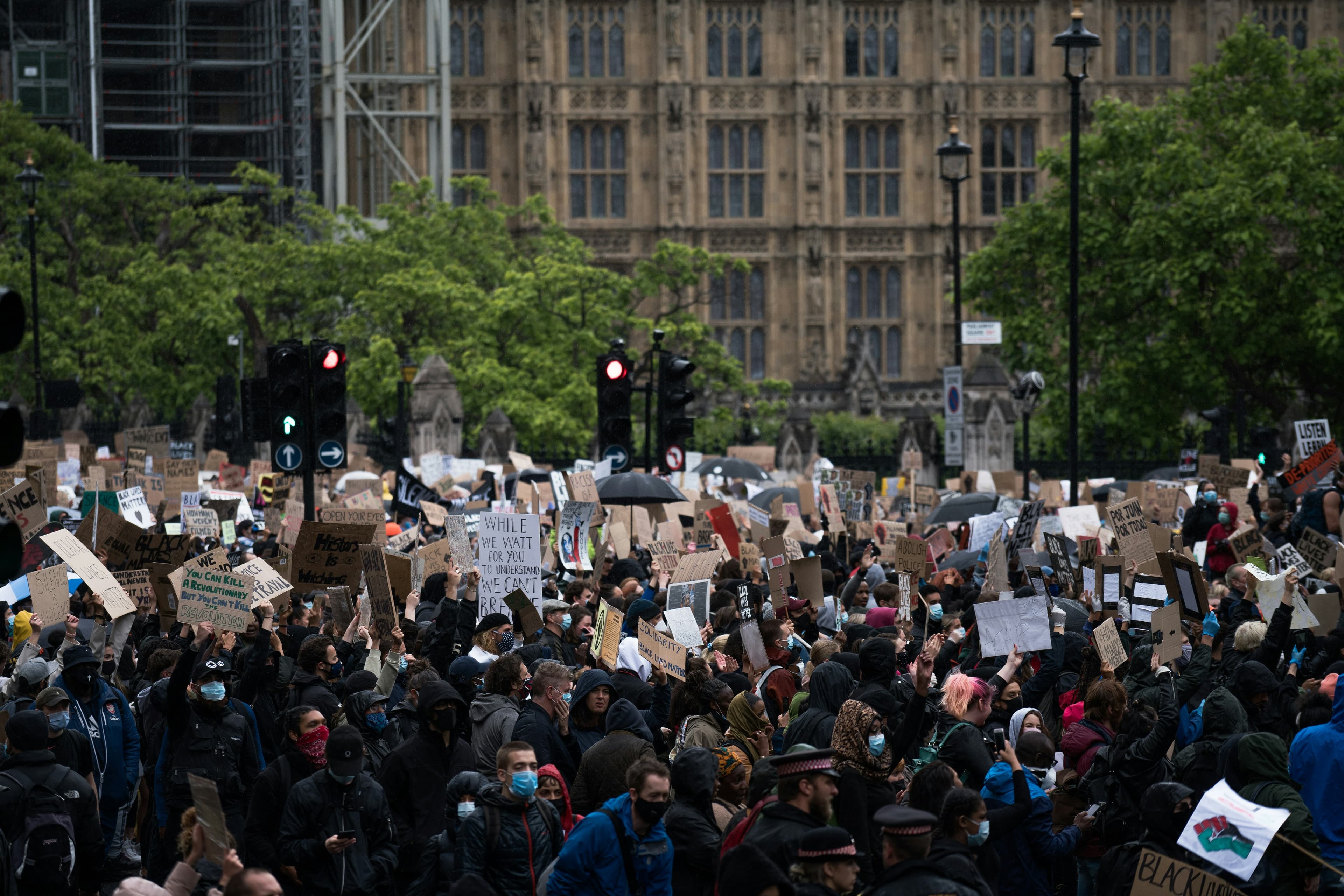
Here's a scenario that plays out more often than most security teams want to admit. An analyst flags a hostile post targeting a named executive. The post gets logged, a ticket opens, and it sits in a review queue. Meanwhile the GSOC is tracking a protest forming two blocks from the executive's hotel that evening. Nobody connects the two. The executive walks into a crowd that at least one angry person online has already announced they'll be at.
That's not a technology failure. It's a workflow failure. And it happens constantly when digital monitoring and physical event tracking live in separate systems with separate teams who barely talk to each other.
The Problem With Siloed Monitoring
Digital analysts see intent. They see what someone is saying, how angry they are, whether the language is escalating. What they usually don't see is where that person is, what's happening physically near the principal, or whether the timing lines up with something on the schedule.
GSOC teams have the opposite problem. They see what's happening on the ground: protest routes, crime incidents, weather impacts on travel, access control events. What they often don't have is any context about who's been making threats online, whether a specific account has been fixating on the executive for months, or whether the crowd forming near the venue includes someone who's been vocal about wanting to cause harm.
Neither view alone is enough to make a confident decision. The analyst who sees the post doesn't know it's happening at a critical moment. The GSOC operator who sees the crowd doesn't know one person in it has been escalating online for weeks. The gap between those two pictures is where incidents happen.
Industry research has consistently shown that threat actors rarely confine themselves to a single domain. People who signal intent online regularly surface in physical environments. People who behave threateningly in person almost always leave a digital trail. Treating those as separate problems, handled by separate teams, with separate data, is how organizations end up reacting to things they should have seen coming.
What You Actually Need to Correlate
The instinct is usually to throw more data at the problem. More feeds, more alerts, more dashboards. That's not the answer. More raw data without structure just creates faster alert fatigue.
What you need is a framework for deciding which combinations of signals matter, and when.
Four layers of information need to be in the same view at the same time:
- Subject activity: What is being said online, by whom, and is it escalating? This includes social platforms, messaging apps, dark-web sources, and any accounts that have previously fixated on the principal or the organization.
- Physical event context: What's happening near the principal's location right now? Protests, demonstrations, crime incidents, severe weather, infrastructure disruptions, major gatherings. Any of these change the operational picture.
- Principal context: Where is the principal actually going? Routes, venues, hotels, dining locations, public appearances, schedule changes. This is the layer that makes everything else relevant or irrelevant.
- Historical behavior: Has this subject escalated before? Have similar conditions preceded incidents in the past? Pattern recognition here matters enormously and gets ignored constantly.
The goal isn't to fuse all of this automatically. It's to give analysts enough overlap to ask the right question: does this online signal become more concerning given what's happening physically nearby?
Geofencing Changes the Signal-to-Noise Ratio
One of the most practical tools for connecting digital and physical monitoring is geofenced intelligence: defining geographic boundaries around venues, hotels, transit routes, and the principal's regular locations, then filtering incoming signals by whether they originate from or reference those areas.
A general social media monitoring feed for a city of a million people generates an enormous volume of content, almost none of which is operationally relevant to what's happening tonight. A geofenced feed around the hotel and a two-block radius around the venue generates a small fraction of that volume, and a much higher proportion of what surfaces is actually worth reading.
Posts from people physically present at a protest staging location can arrive 15 to 30 minutes before the activity reaches official reporting channels. Location-tagged content from someone near a principal's hotel who has also been posting hostile content online is a different kind of signal than either data point would be on its own.
For this to work, AI classification needs to sit between the raw feed and the analyst. Without it, even a geofenced feed at a large event generates more volume than humans can usefully review in real time. Classification that separates physical security signals from general event chatter, crowd updates, and unrelated local content makes the feed actually usable.
How to Recognize Mobilization Before It Becomes Proximity
Most threat assessment frameworks focus on what someone is saying. The harder and more important question is whether they're doing anything about it.
Mobilization indicators are the shift you're watching for. A subject who moves from expressing grievance to referencing a specific event, a specific date, or a specific location has crossed a meaningful line. Someone who asks questions about the principal's schedule, reacts to public appearance announcements, or coordinates with other accounts around a shared grievance is different from someone who just vents anger regularly.
Travel signals matter too. A subject based in one city who suddenly posts about being in the same metro area as an upcoming executive appearance, without any other obvious reason to be there, is worth looking at more carefully. This is especially true when the timing aligns with a publicly announced event.
The transition from intent to proximity is where real-world contact becomes possible. Catching it requires knowing both the behavioral pattern online and the physical context of where the principal will be. Neither piece alone gets you there.
The Movement Decision Problem
Here's where convergence actually earns its value. A protection team is about to move a principal through a city. They have a route planned. The GSOC has flagged a protest on one street. Digital monitoring has flagged elevated hostility from accounts in that general area. Weather is clear. The protest appears to be peaceful so far.
Is the route safe to proceed? Is an alternative route better? Should the timing shift? Does the principal need additional coverage for this movement?
None of those questions can be answered confidently from a single data stream. You need the protest location and estimated size, the tone and trajectory of the online chatter, the principal's schedule and what can realistically flex, and some sense of whether this situation resembles prior ones that did or didn't escalate.
Teams that run digital and physical intelligence from separate systems have to rebuild context from scratch every time they need to answer that question. Someone pulls up the social monitoring tool, someone else checks the event feed, someone calls the GSOC. By the time the picture is assembled, the timing window has often closed.
Teams that run both in a unified platform move from "interesting signal" to "here's what it means for tonight's movement plan" without that reconstruction step. That's not a minor efficiency gain. In the scenarios where timing matters, it's the difference between protective action and reactive response.
Building Indicators and Warnings That Actually Work
One thing GSOCs consistently underinvest in is building a set of defined indicators and warnings specific to their principal's profile and operating environment. Most organizations settle for generic alert thresholds rather than building intelligence requirements tailored to the actual threats they face.
Priority intelligence requirements (PIRs) are a military concept that transfers well to corporate protective intelligence. A PIR identifies what you specifically need to know to make a decision, rather than just monitoring everything broadly and hoping something relevant surfaces. For executive protection, a PIR might define: what online behaviors, combined with what physical indicators, would require a route change? What combination of signals triggers an additional advance agent? What warrants alerting law enforcement?
When those thresholds are defined in advance and matched to data feeds that can actually surface the right signals, the decision process under pressure gets dramatically faster. Analysts aren't making it up in the moment. They're matching what they see to a framework they've already agreed on.
What Cross-Domain Integration Actually Looks Like in Practice
When digital and physical intelligence genuinely converge, a few things become possible that aren't possible otherwise.
Threat actor profiles can be enriched in real time. An online subject who's been in the monitoring queue for six months suddenly becomes operationally relevant the moment their location overlaps with a principal's schedule. Without integration, that connection gets made hours late or not at all.
False positives drop because context filters them. A hostile post that looks alarming in isolation looks different when the physical environment around the principal is calm and the subject shows no signs of mobilization. Context doesn't always escalate things. Sometimes it de-escalates them, which is equally valuable for a team trying to avoid unnecessary disruption to a principal's schedule.
Post-incident analysis improves. When everything is in one system, you can look back at what signals were present before an incident and understand what the pattern looked like. That's how you tune your indicators and warnings over time rather than just running the same general monitoring indefinitely.
The Workflow Gap Is the Actual Problem
The technology for converged digital-physical monitoring exists. Platforms that pull in social intelligence, event feeds, geofenced data, and principal context in a unified view are available and deployed at organizations that take this seriously.
What's harder to fix is the workflow gap. Digital and physical security teams often report to different parts of the organization, use different tools, and have different operating tempos. Intelligence analysts and protective agents don't always have a shared vocabulary for what counts as a credible threat. Handoffs between teams during a fast-moving situation are where context gets lost.
Convergence isn't just a technology decision. It's an operational one. It requires defining in advance which team owns cross-domain escalation, what the notification path looks like when a signal spans both digital and physical domains, and what actions each tier of the response framework authorizes.
Get the workflow right and the technology becomes very powerful. Leave the workflow broken and even the best platform just surfaces alerts that nobody acts on in time.