
जांच और threat monitoring के लिए OSINT search techniques
 Nicholas Van Landschoot
जांच और threat monitoring के लिए बेहतर OSINT searches बनाएँ। जानें कब broadly search करें, Boolean queries उपयोग करें, context collect करें, और AI से filter करें।
आपकी search strategy तय करती है कि क्या मिलेगा और क्या छूट जाएगा। यह तब भी मायने रखता है जब आप किसी person of interest की जांच कर रहे हों, किसी company पर research कर रहे हों, या किसी executive या brand के खिलाफ threats की निगरानी कर रहे हों।
जोखिम पहले result की समीक्षा से पहले शुरू हो जाता है। query में गलत restriction जोड़ दें, तो relevant content आपकी जांच तक कभी नहीं पहुँचेगा। बाद में कोई filter उस data से material recover नहीं कर सकता जो आपने collect ही नहीं किया।
एक प्रभावी OSINT search strategy subject research, broad discovery, platform search rules, और results की समीक्षा को जोड़ती है। यह direct keyword matches से आगे accounts, conversations, और related topics तक पहुँचती है जो किसी post को अर्थ देते हैं।
यह guide बड़े पैमाने पर searching और monitoring पर केंद्रित है। लक्ष्य बड़ी data volumes में relevant public information collect करना है, साथ ही collection costs और review work को नियंत्रण में रखना।
OSINT search strategy सिर्फ Google dorking से आगे जाती है
Google dorking advanced search operators का उपयोग करके results को narrow करता है, जैसे search को किसी website या exact phrase तक सीमित करना। यह उपयोगी है, लेकिन problem का सिर्फ एक हिस्सा cover करता है।
Jason Hill की Google Dorking for OSINT: The Practical Investigator's Guide आपके काम के उस हिस्से के लिए उपयोगी reference है।
एक broader search strategy coverage के सवालों का भी जवाब देती है। कौन से names और related topics शामिल करने चाहिए? किन sources को search कर सकते हैं? Replies और attached media का क्या होता है? Subject बदलने पर gaps कैसे detect करेंगे?
एक precise query तभी valuable है जब वह अभी भी वही information लौटाए जिसकी आपको जरूरत है।
1. Keywords चुनने से पहले goal तय करें
पहले define करें कि आपको क्या find करना है और missed result का क्या मतलब होगा।
Due diligence में, आपको company की ownership, disputes, और public history establish करनी पड़ सकती है। executive protection (एक्जीक्यूटिव प्रोटेक्शन) के लिए, आपको किसी व्यक्ति के बारे में relevant discussion find करनी होती है, ऐसे content सहित जो कभी obvious threat word का उपयोग न करे। इन goals के लिए अलग sources, terms, और review rules चाहिए।
फिर volume measure करें। “High volume” का मतलब real collection limit होना चाहिए, जैसे result cap, cost, या delay। इसका मतलब सिर्फ “एक analyst जितना पढ़ना चाहता है उससे ज्यादा posts” नहीं होना चाहिए।
एक distinctive executive name broad collection support कर सकता है। global brand या common word पर named company कहीं अधिक unrelated content produce कर सकती है। आमतौर पर quiet name भी major event के दौरान surge generate कर सकता है।
query को और restrictive बनाने से पहले assumptions test करने के लिए short collection sample का उपयोग करें।
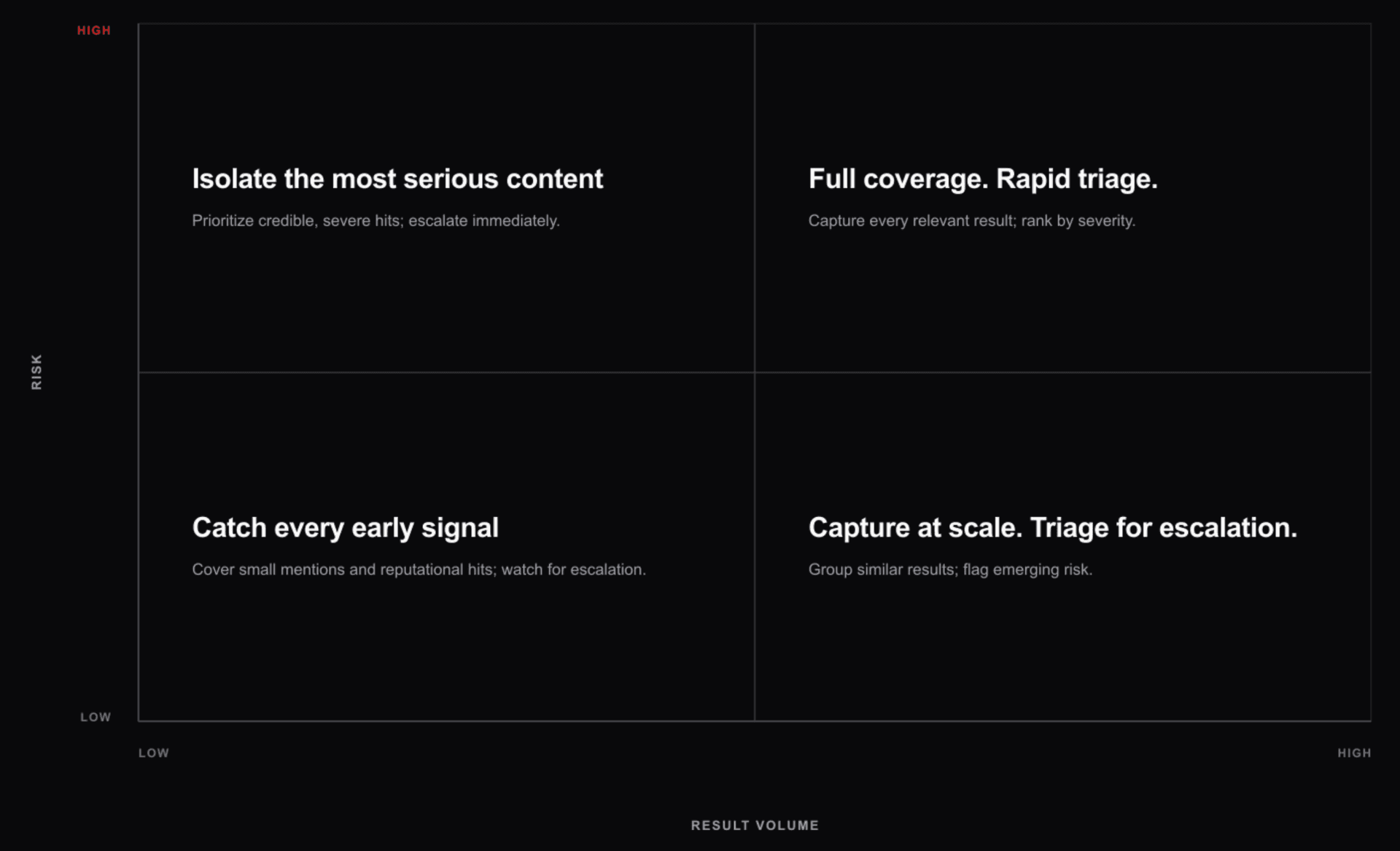
Low-volume terms के लिए broadly search करें। Modifiers के बिना core term search करना usually बेहतर coverage देता है और relevant content miss होने की संभावना कम करता है। Truly high-volume terms के लिए, एक या कुछ specific qualifiers जोड़ने से collection volume कम करने में मदद मिल सकती है, search को useful रखते हुए।
| Search situation | Starting approach | Main risk to check |
|---|---|---|
| Manageable volume के साथ distinctive name | Name और important variants broadly search करें | Indirect references या aliases miss होना |
| कई लोगों द्वारा shared common name | अलग-अलग identity clues के साथ कई searches | ऐसा detail require करना जो relevant posts omit कर दें |
| Unrelated meanings वाला brand name | Narrow exclusions या separate contextual queries test करें | दोनों meanings discuss करने वाले posts हट जाना |
| Terrorism जैसा broad topic | Relevant places, events, sources, या subtopics define करें | Access और budget से ज्यादा collect करना |
जहाँ collection manageable हो, searches broad रखें। जब measured volume या ambiguity coverage के loss को justify करे, तब narrow करें।
2. Name से आगे subject पर research करें
Queries लिखने से पहले, लोग subject को कैसे refer करते हैं, यह समझें।
Company के लिए, brands, products, executives, facilities, projects, और relevant local issues collect करें। Person के लिए, public aliases, titles, account handles, और investigation से relevant known associations पर विचार करें। जहाँ subject की activity warrant करे, other languages और transliterations शामिल करें।
कल्पना करें एक fictional company Alder Ridge Holdings है जो locally “Eastbank project” के नाम से जाना जाने वाला warehouse बना रही है। Residents “Eastbank,” “the new warehouse,” या planning dispute discuss कर सकते हैं बिना company का नाम लिए।
सिर्फ “Alder Ridge Holdings” monitor करने से वे discussions miss हो जाएँगी, चाहे results filter कितने भी अच्छे हों।
हर search term, उसका reference, और investigation में क्यों belong करता है — इसका छोटा record बनाएँ। जब दूसरा analyst takeover करे, configuration review और update करना आसान हो जाता है।
3. Query expansion assume करने की बजाय test करें
कुछ search systems related forms return करते हैं या query को exact words से आगे interpret करते हैं। दूसरे आपके दिए terms पर कहीं अधिक depend करते हैं।
यह assume न करें कि unquoted search हर misspelling, nickname, abbreviation, या translation find करेगी। Platform की website, उसके API, और third party tool जो उसके data का उपयोग करे — इनके बीच search behavior अलग होता है।
जिस interface से आप actually collect करते हैं, उसे test करें। Known public examples से देखें कि query वे variants find करती है या नहीं जो matter करते हैं।
Practical approach important names और aliases के explicit searches को broader discovery queries के साथ combine करता है। हर possible typo invent करने की जरूरत नहीं। Subject research या observed results जब reason दें, variants add करें।
Overlap expect करें। जहाँ available हो, stable post identifiers से duplicate records हटाना prefer करें। Broad query से term exclude करने से gap बन सकता है अगर narrower query fail हो, collection limit hit करे, या different period cover करे।
4. हर platform और access method के लिए queries बनाएँ
Same query हर जगह same behave नहीं करेगी।
X का advanced search interface words, exact phrases, exclusions, accounts, और dates के options देता है। इसकी API query documentation अलग से query construction और access level पर depend restrictions describe करती है। Browser में काम करने वाली query को भी collection tool में test करना चाहिए।
हर source के लिए confirm करें कि आप क्या search और retrieve कर सकते हैं। Check करें कि results में replies शामिल हैं या नहीं, कितना पीछे जाते हैं, क्या और pages request करनी पड़ती हैं, और ranking या result caps क्या limit करते हैं।
अगर source weak keyword search देता है लेकिन specific public accounts तक useful access है, account monitoring बेहतर starting point हो सकता है। जहाँ दोनों available न हों, search engine discovery या another permitted data source मदद कर सकता है, coverage limits record करते हुए।
Query design और source access same problem के अलग हिस्से हैं। Well written query उस source को overcome नहीं कर सकती जो relevant content expose नहीं करती।
5. Ambiguity resolve करने के लिए Boolean search उपयोग करें
Boolean search alternatives, required terms, और exclusions combine करता है। यह सबसे useful है जब broad term के कई meanings हों या production आपके collect capacity से ज्यादा content हो।
Logic simple है, लेकिन syntax platform के अनुसार बदलती है:
| Search logic | Purpose | What to watch for |
|---|---|---|
| OR | Names, aliases, या alternatives include करें | Broad alternative results dominate कर सकता है |
| AND | दूसरा relevant concept require करें | Relevant posts वह concept omit कर सकते हैं |
| Exact phrase | Words का particular sequence match करें | Wording variations miss हो सकती हैं |
| Exclusion | Unrelated results का known source हटाएँ | Relevant posts में excluded term भी हो सकता है |
मान लें subject का नाम sports team से shared है। Team का full name exclude करना हर result में subject के employer mention require करने से कम restrictive हो सकता है।
लेकिन inspect करें exclusion क्या हटाता है। Threat subject की team से comparison कर सकता है, या ऐसी conversation में appear हो सकता है जिसमें दोनों का mention हो।
जब कई meanings compete करें, separate contextual queries often एक long required words list वाली query से ज्यादा control देती हैं।
6. Threat keywords को collection का sole route न बनाएँ
Executive के name और “kill” जैसे word दोनों require करने वाली query सिर्फ narrow statements का set find करेगी।
यह alias use करने वाला content, parent post पर context rely करने वाला content, या ऐसी language में intent express करने वाला content miss करती है जिसकी आपने prediction नहीं की। Explicit threat के बिना review deserve करने वाले relevant behavior भी miss हो जाते हैं।
जहाँ volume allow करे, पहले subject पर discussion collect करें और meaning बाद में assess करें। Direct threat queries उस collection को supplement कर सकती हैं, लेकिन पूरे scope define नहीं करनी चाहिए।
Specific language की अभी भी भूमिका है। Relevant community, local dialect, या recurring discussion में observe किए terms ऐसा material reveal कर सकते हैं जो formal name नहीं देता। इन terms को research और actual results से build करें।
लोग जो language use करते हैं, उसके लिए search करें। Analyst जो words behavior describe करने के लिए use करेगा, सिर्फ उन पर rely न करें।
7. Replies, media, और surrounding context collect करें
कुछ relevant content में आपके original keywords में से कोई नहीं होता।
“he will regret coming here” कहने वाली reply अलग में little meaning रखती है। Executive और upcoming visit name करने वाले post के नीचे, clear subject है और contextual review deserve करती है। फिर भी automatic threat label की बजाय assessment चाहिए।
जहाँ available हो, parent post, relevant replies, quoted material, attached media, और source references retain करें। Case से relevant हो तो connected account activity review करें।
यह और keywords add करने से अलग form की expansion है। आप content pieces के बीच explicit relationships follow कर रहे हैं।
Missing context भी record करें। Deleted parent post या unavailable video assessment में visible gap छोड़ना चाहिए। System unavailable information को evidence नहीं मानना चाहिए कि कुछ concerning exist नहीं करता।
8. Collection के बाद AI filtering उपयोग करें, और rejections test करें
Language models collected content को ऐसे criteria के against classify करने में मदद कर सकते हैं जिन्हें keywords alone से express करना hard हो। कुछ teams के लिए broader collection practical बना सकता है। Cost और accuracy अभी भी model, content, context, और review standard पर depend करते हैं।
Relevance को threat assessment से अलग रखें। पहले पूछें item सही subject concern करता है या नहीं। फिर assess करें वह क्या कहता है और review require करता है या नहीं। Uncertain items person के examine के लिए available रखें।
Decision के लिए जरूरी context provide करें। Subject सिर्फ parent post या image में appear हो, तो सिर्फ reply text पाने वाले model के पास essential information नहीं होगी।
Filters को examples के against evaluate करें जिनकी analysts ने review की है। Indirect references, ambiguous names, other languages, quoted threats, और context में benign लेकिन concerning दिखने वाला content शामिल करें।
सबसे important: rejected results sample करें। सिर्फ model accept करने वाले items review करने से little पता चलता है कि relevant material में से क्या drop हो रहा है।
Original content preserve करें और filtering rules या model का version record करें। Gap discover होने पर earlier decisions revisit करने का तरीका चाहिए।
9. Native search short पड़े तो alternatives उपयोग करें
Native platform search information का एक route है। Source और access के अनुसार, दूसरे routes में public account feeds, search engine indexes, public archives, और licensed data feeds शामिल हैं।
इन routes की अलग strengths हैं। Search engines accounts और pages discover करने में मदद कर सकते हैं। Archives historical research support कर सकते हैं। Keyword search weak हो तो account feeds continuity दे सकते हैं।
Coverage और delay check किए बिना किसी को complete substitute न मानें। Indexed page यह prove नहीं करता कि account की हर post या reply available है।
अगर permitted access और costs allow करें, defined body of public content को अपने searchable index में collect करना भी useful हो सकता है। पहले scope define करें। Broad ingestion research need serve करनी चाहिए, अपना goal नहीं बननी चाहिए।
AI search sources discover करने में मदद कर सकता है, लेकिन underlying links retain और verify करें। Generated answer collection record नहीं है।
10. Direct links से आगे related discussions find करें
Replies और mentions follow करने से explicit connection वाला content मिलता है। कुछ relevant discussions में ऐसा link नहीं होता।
दो accounts same local dispute को different terms में discuss कर सकते हैं। नई community project के लिए different name adopt कर सकती है। Discussion दूसरे platform पर move हो सकती है बिना original thread link किए।
Topic analysis, semantic similarity, और relevant public material की comparison further review के leads produce कर सकती है। वे establish नहीं करती कि accounts same person के हैं या shared topic coordination prove करता है।
यह वह area है जिस पर हम Intrace में काम करते हैं: direct name matches और obvious account connections से आगे discovery expand करना। Useful result additional relevant material है जिसे analyst inspect और verify कर सकता है।
हर suggested connection का reason visible रखें। दूसरा analyst similarity score को proof माने बिना assess कर सके।
11. Subject बदलने पर searches update करें
पहला collection आपको वे चीज़ें सिखाएगा जो initial research में नहीं थीं।
New account names, phrases, projects, locations, और disputes search strategy में feed back होने चाहिए। Additions review करें, फिर test करें कि वे relevant material find करते हैं जो current configuration miss करती है।
Fictional Alder Ridge investigation में, Eastbank project का new nickname added query justify कर सकता है। Irrelevant results का temporary spike short term adjustment justify कर सकता है, permanent exclusion की बजाय।
Change log रखें। Record करें क्या बदला, क्यों, और कब effective हुआ। Collected volume में differences explain करना और जहाँ source access allow करे past searches revisit करना possible बनाता है।
Investigators new leads follow करते समय यह already करते हैं। Ongoing monitoring को same habit चाहिए। Regular reviews set करें और subject से जुड़े major changes के बाद searches revisit करें।
12. Results कितने clean दिखते हैं — सिर्फ यह न measure करें; coverage measure करें
Quiet feed important content miss करते हुए successful दिख सकता है।
Relevant items का reference set बनाएँ जो आपको already exist करते पता हैं। Test करें collection उन्हें find करती है या नहीं, context retrieve करती है या नहीं, और filters retain करते हैं या नहीं। यह उस set के against coverage measure करता है, पूरे internet के against नहीं।
अलग questions track करें:
- Query ने item match किया?
- Source ने access limits के भीतर return किया?
- Collection process ने retrieve किया?
- Relevance filter ने retain किया?
- सही person को time पर मिला?
ये checks failure locate करने में मदद करते हैं। Keywords add करना collection cap fix नहीं करेगा। AI prompt change missing replies fix नहीं करेगा।
यह भी measure करें review तक कितना irrelevant material पहुँचता है। Good search design missed content, collection cost, और analyst time balance करती है। सही balance investigation के purpose और missed result के consequence पर depend करता है।
OSINT search techniques के बारे में common questions
Google dorking और OSINT search strategy में क्या अंतर है?
Google dorking search operators से indexed results narrow करता है। OSINT search strategy subject research, source selection, query testing, collection, context, और review भी cover करती है। Operators उस process के अंदर एक tool हैं।
OSINT searches broad होनी चाहिए या specific?
जब subject distinctive हो और collection volume manageable हो, broadly start करें। Restrictions तब add करें जब ambiguity, cost, या source limits justify करें। Rely करने से पहले test करें हर restriction क्या हटाती है।
क्या AI Boolean search replace कर सकता है?
वे different purposes serve करते हैं। Boolean queries control करती हैं source क्या return करे। AI collected content का meaning assess करने में मदद कर सकता है। AI filtering overly narrow query excluded material recover नहीं कर सकती।
ऐसे threats कैसे find करें जो subject का नाम नहीं लेते?
Related people, projects, places, और terminology पर research करें। जहाँ available हो relevant replies और conversation context collect करें। Findings से additional searches develop करें, सिर्फ subject के formal name पर rely करने की बजाय।
Search strategy practice में लाएँ
Intrace का investigation suite identity research, link analysis, और social account review जोड़ता है। इसका Digital Risk Intelligence people और organizations के खिलाफ online threats की ongoing monitoring support करता है।
अगर आपकी team review कर रही है कि वह कैसे search, collect, और assess relevant content करती है, Intrace demo book करें। Subject या monitoring use case लाएँ ताकि हम coverage और context पर focus कर सकें जिसकी आपकी team को जरूरत है।